Texas weather can be brutal on asphalt. Intense summer heat, UV exposure and occasional heavy rains all take a toll on a parking lot surface, and knowing when to apply a protective sealcoat versus when you need a complete mill and overlay can save property managers thousands of dollars.
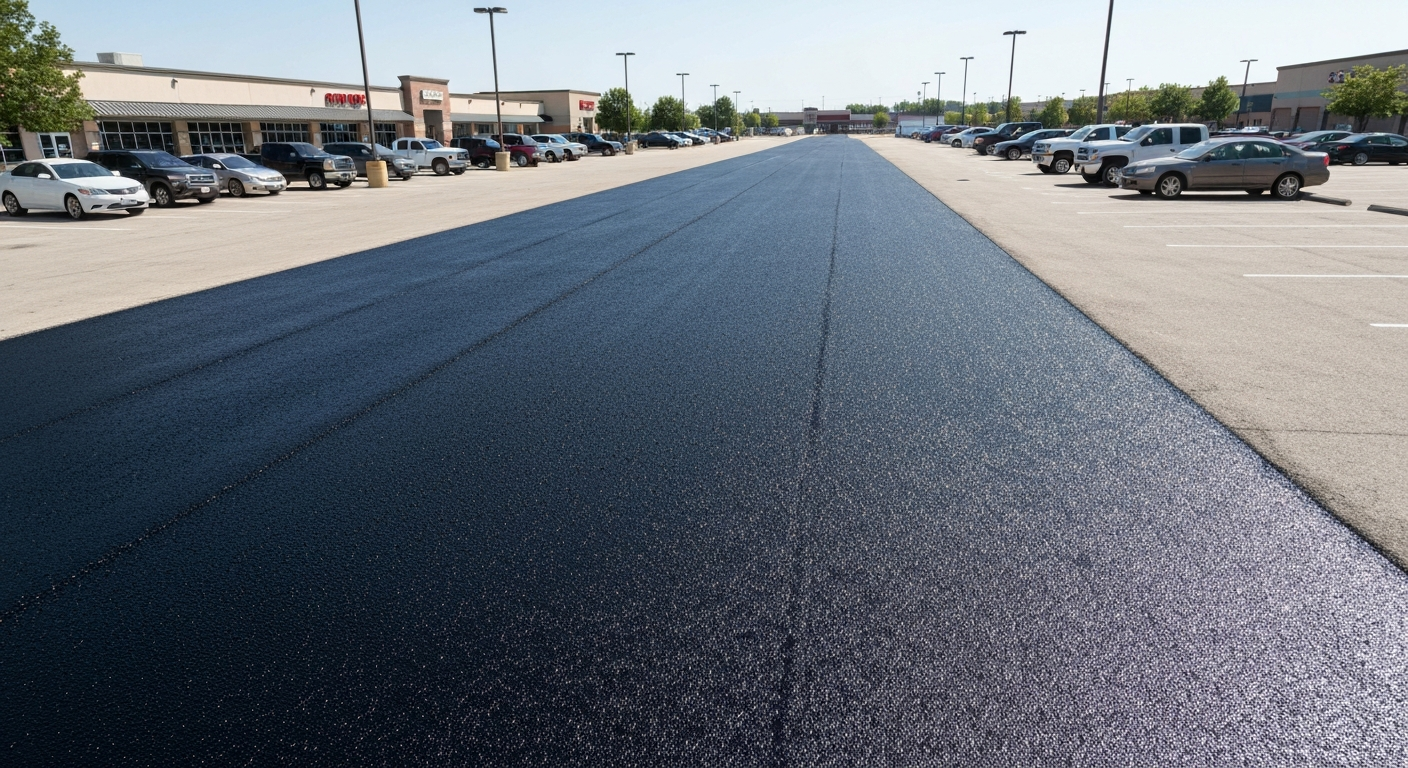
Sealcoating is preventative maintenance. A sealcoat is a thin protective layer applied over sound asphalt to block water, UV and oil, restore a rich black finish, and give the surface a clean, well-maintained look. It's the right call when the asphalt is structurally solid: minor surface fading, light oxidation, and shallow hairline cracks are all good candidates for a sealcoat.
Resurfacing, a mill and overlay, is a heavier intervention. It's necessary when the surface has widespread cracking, raveling, alligator (fatigue) cracking, or areas where the pavement has begun to deform. If the base is still stable, an overlay bonds a new layer of hot mix over the prepared surface and extends the life of the lot significantly without the cost of full reconstruction.
A simple rule of thumb: if the damage is cosmetic and the lot drains well, sealcoat. If cracks are wide, interconnected, or running through the full depth of the pavement, it's time to talk about resurfacing or patching first, and then sealcoating the result so the new surface lasts.
Crack repair often comes before either step. Filling cracks keeps water out of the base, which is the single biggest factor in how long an Austin parking lot lasts. We assess the lot, recommend the right sequence, and quote it all up front so there are no surprises.
Have a project like this?
Ask us about your lot. We'll walk the site and send a fixed, itemized quote.